Chaga Mushroom | What It Is & Why It's in Your Coffee
Chaga Mushroom: What It Is, How It's Used, and Why It's Trending in Coffee and Wellness Drinks
By Chris Rea, COO of Mariko Grove · Last updated June 3rd, 2026
Chaga mushrooms have gained growing attention in recent years as consumers explore specialty beverages and traditional ingredients from around the world. Often found in mushroom coffee blends, teas, and powdered drink mixes, Chaga is becoming a popular addition to modern daily routines.
But what exactly is Chaga — and why are so many people curious about it?
This guide explains what Chaga mushrooms are, how they're traditionally used, and what to know before trying Chaga products.
What Is Chaga?
Chaga (scientific name Inonotus obliquus) is a type of fungus that grows primarily on birch trees in colder climates, including parts of North America, Northern Europe, and Asia.
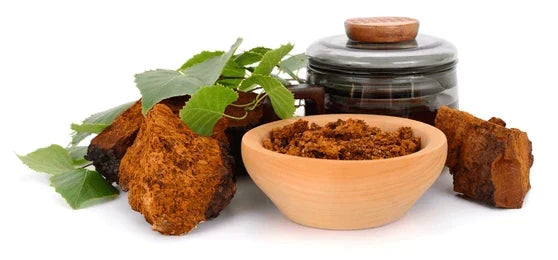
Unlike typical mushrooms with caps and stems, Chaga forms a dark, rugged growth on the outside of trees. Inside, it has a warm orange-brown color and is commonly processed into powders or extracts for use in beverages and foods.
Historically, Chaga has been prepared as a brewed drink in various northern cultures, where it was enjoyed much like herbal tea.
Chaga and the Birch Tree: An Ecological Relationship
Understanding Chaga starts with understanding the birch tree. Chaga is not technically a mushroom in the way most people picture one — it is a sclerotia, a dense mass of mycelium that forms on the outside of living birch trees. Unlike the fruiting bodies of most fungi (the cap-and-stem structures we recognize as mushrooms), Chaga's visible form is this dark, irregularly shaped growth that protrudes from the tree's bark.
Chaga develops slowly. A single growth can take anywhere from three to five years — and sometimes much longer — to reach harvestable size. The fungus establishes itself through a wound or crack in the birch's bark and gradually forms a symbiotic, parasitic relationship with its host tree. Over time, the Chaga mass accumulates compounds drawn from both its own metabolism and the birch tree itself, including betulin and betulinic acid derived from birch bark.
This ecological relationship is part of what makes Chaga distinctive among functional mushrooms. It grows almost exclusively on birch species (Betula genus), with a strong preference for yellow birch and white birch. While Chaga has occasionally been found on other hardwood species like alder and elm, these occurrences are rare and the resulting growths are generally considered less desirable.
The best-known Chaga habitats span the boreal and subarctic forests of Russia, Scandinavia, Canada, and the northern United States — cold climates where birch trees thrive. This geographic specificity contributes to Chaga's identity as a wild-harvested, northern forest ingredient, though cultivation research is ongoing.
Traditional Use Across Cultures
Chaga's history as a human-consumed ingredient stretches back centuries across multiple northern cultures.
Russia and Siberia
The most extensive traditional use of Chaga is documented in Russian and Siberian folk practices. Indigenous Khanty and Evenki peoples of Western Siberia prepared Chaga decoctions as an everyday beverage and as part of their traditional wellness practices. Russian peasant communities later adopted Chaga tea as a common household drink. The word "Chaga" itself is believed to derive from the Komi-Permyak language of the Ural region, where the fungus was widely gathered.
Scandinavia
In Finland and other parts of Scandinavia, Chaga was used as a folk tea ingredient for generations. Its most famous modern chapter came during World War II, when Finland's coffee supply was severed by wartime trade disruptions. Finns turned to Chaga as a coffee substitute — drying and grinding the fungus into a powder that was brewed much like coffee. The resulting beverage was dark, smooth, and mildly sweet. This wartime adaptation is frequently cited as a direct precursor to today's commercial mushroom coffee products.
Indigenous North American Use
In North America, various First Nations communities in the boreal regions of Canada also gathered and prepared Chaga, typically as a brewed tea. Ethnobotanical records note its traditional use among Cree and Ojibwe peoples, though documentation is less extensive than for Siberian and Scandinavian practices.
Why Chaga Is Becoming Popular
Interest in Chaga reflects a broader trend toward exploring traditional ingredients and specialty beverages. Many consumers are drawn to foods that feel natural, minimally processed, and connected to long-standing culinary practices.
Some of the most common reasons people choose Chaga products include:
1. A Traditional Tea Alternative
Chaga has a long history of being brewed into warm beverages. Today, many people enjoy it as a coffee alternative or as part of a relaxing drink routine.
2. Unique Flavor Profile
Chaga beverages are often described as:
- Earthy
- Smooth
- Mildly woody or vanilla-like
- Less bitter than coffee
Because of this subtle flavor, Chaga blends easily with coffee, cacao, or plant-based milks.
3. Interest in Functional-Style Foods
Modern shoppers are increasingly interested in foods that feel intentional or thoughtfully sourced. Chaga fits into this category as an ingredient rooted in traditional preparation methods and natural harvesting environments.
How Chaga Products Are Made
Most Chaga products go through several preparation steps before reaching consumers:
- Chaga is harvested from birch trees or cultivated under controlled conditions.
- The material is dried to preserve quality.
- It is ground into powder or processed through extraction methods.
- The finished ingredient is used in teas, coffee blends, or powdered drink mixes.
Extraction methods vary by brand, which can influence flavor and concentration.
Preparation Methods Compared
Chaga can be consumed in several different formats, each with its own characteristics. The table below compares the most common preparation methods:
| Method | What It Is | Brew / Prep Time | Flavor Notes | Convenience |
|---|---|---|---|---|
| Chaga tea (chunks) | Dried Chaga pieces simmered in water | 1-4 hours (low simmer) | Rich, earthy, mildly sweet | Low — requires long brew time and straining |
| Chaga tea (powder) | Ground Chaga steeped like loose-leaf tea | 15-30 minutes | Earthy, slightly lighter than chunk brew | Moderate — faster but still requires steeping |
| Chaga tincture | Alcohol-based extraction (often dual-extracted) | Ready to use (drops) | Concentrated, slightly bitter | High — just add drops to any beverage |
| Chaga coffee blend | Chaga extract mixed with ground or instant coffee | Same as regular coffee (2-5 minutes) | Coffee-forward with smooth, earthy depth | High — brews like normal coffee |
| Chaga powder (smoothie add-in) | Fine Chaga powder blended into cold drinks | Instant (blend and go) | Mild, earthy undertone | High — dissolves in any blended drink |
Traditional Chaga tea made from chunks requires the longest preparation time but produces the most robust flavor. For everyday convenience, Chaga coffee blends and tinctures offer the easiest integration into existing routines. The method you choose often comes down to how much time you have and whether you prefer a standalone Chaga beverage or want to add it to something you're already drinking.
What Does Chaga Taste Like?
One of the reasons Chaga works well in beverages is its approachable flavor.
Depending on preparation, people often describe it as:
- Smooth and earthy
- Slightly nutty or woody
- Naturally mild without strong mushroom flavor
When blended into coffee or lattes, Chaga typically enhances depth without overpowering the drink.
Common Ways People Use Chaga
Chaga is versatile and easy to incorporate into everyday routines. Popular uses include:
- Brewed as a tea or decoction
- Added to mushroom coffee blends
- Mixed into smoothies or warm drinks
- Combined with cacao or chai-style beverages
- Used in instant drink packets for convenience
Preparation methods vary, but most powdered products dissolve easily in hot water.
Try Chaga in Mariko Grove's Mushroom Coffee
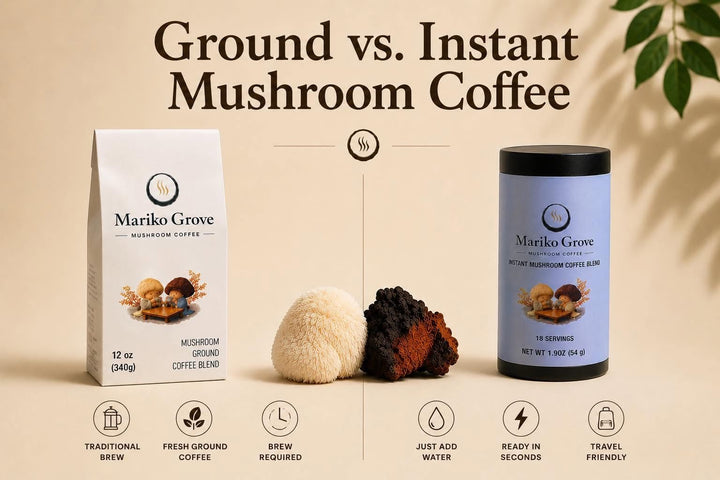
At Mariko Grove, Chaga is one of our two signature mushroom characters — you'll spot the Chaga mascot on our packaging and throughout our site. We pair Chaga with Lion's Mane in both our Ground Mushroom Coffee and Instant Mushroom Coffee, so you can enjoy Chaga's smooth depth in whichever format fits your morning. Learn more on our Our Mushrooms page.
Choosing a Quality Chaga Product
If you're shopping for Chaga, consider these factors:
Ingredient Transparency
Look for clear labeling that identifies Chaga as the primary ingredient and lists serving sizes.
Harvesting and Sourcing
Some brands provide details about where their Chaga is sourced, which can be important to consumers interested in sustainability. Wild-harvested Chaga from birch forests and cultivated Chaga grown under controlled conditions can differ in composition, and transparent brands specify which they use.
Processing Information
Extraction methods and preparation techniques can influence flavor and consistency.
Third-Party Testing
Independent testing may help verify product purity and quality. If you'd like to understand what third-party testing actually looks like, our guide on what a Certificate of Analysis (COA) is walks through the details.
Chaga vs. Traditional Coffee
Chaga and coffee are fundamentally different ingredients, but they often end up in the same cup. Here's how they compare across several practical dimensions:
| Feature | Coffee | Chaga Beverage |
|---|---|---|
| Source | Coffee beans (Coffea plant) | Birch-grown fungus (Inonotus obliquus) |
| Flavor | Bold and roasted | Smooth, earthy, mildly sweet |
| Caffeine | Naturally contains caffeine (~95 mg per 8 oz) | Caffeine-free unless blended with coffee |
| Preparation time | 2-5 minutes (drip, pour-over, instant) | Varies widely: minutes (instant/powder) to hours (chunk tea) |
| Antioxidant content | Contains chlorogenic acid and other polyphenols | Contains polyphenols, melanin, and betulinic acid compounds |
| Flavor versatility | Pairs with milk, sugar, syrups, spices | Pairs with coffee, cacao, chai, plant milks |
| Shelf life | Whole beans: 6-9 months; ground: 3-5 months | Dried chunks: 1-2 years; powder: 1-2 years |
| Use | Morning and afternoon beverage | Coffee alternative, addition, or standalone tea |
Many people choose Chaga alongside coffee rather than as a full replacement, depending on taste preferences and daily habits.
A Note on Antioxidant Claims
You may encounter marketing that describes Chaga as having "the highest ORAC value of any food." ORAC (Oxygen Radical Absorbance Capacity) is a laboratory assay that measures antioxidant capacity in a test tube. However, the USDA withdrew its ORAC database in 2012, noting that ORAC values have no established relevance to the effects of specific compounds on human health.
A 2021 study published in the Journal of Agriculture and Food Research did find that Inonotus obliquus (Chaga) extracts showed notably high antioxidant activity compared to five other mushroom species tested under laboratory conditions. This is consistent with Chaga's known melanin and polyphenol content. However, laboratory antioxidant measurements do not directly translate to how these compounds behave in the human body after digestion.
The honest takeaway: Chaga does contain a range of antioxidant compounds, which is well-documented in published research. What that means for any individual person's wellness is a much harder question to answer, and one that goes beyond what current research can confirm.
Is Chaga Right for Your Routine?
Chaga is best viewed as a food or beverage ingredient that offers variety and new flavor experiences. People often enjoy it as part of a balanced lifestyle focused on exploring different ingredients and drink rituals.
As with any dietary product:
- Review ingredient labels carefully.
- Start with small servings when trying something new.
- Consult a qualified professional if you have dietary concerns, allergies, or sensitivities.
Final Thoughts
Chaga mushrooms bring together traditional preparation methods and modern beverage innovation. From Siberian decoctions and Finnish wartime coffee substitutes to today's instant mushroom coffee blends, Chaga has been brewed into warm drinks for generations across northern cultures. Its earthy flavor, versatility, and compatibility with coffee and tea have helped it become a standout ingredient in today's specialty drink market.
Whether enjoyed on its own or blended into mushroom coffee, Chaga offers a unique way to explore new flavors while diversifying your daily beverage routine.
Curious about Chaga in your cup? Browse Mariko Grove's mushroom coffee collection — each blend features Chaga and Lion's Mane, third-party tested and ready to brew.
About the Author
Chris Rea is the COO of Mariko Grove, overseeing operations, sourcing, and shipping logistics. He ensures every batch of mushroom coffee is handled with care from warehouse to doorstep.
Sources
- Maine Forest Service. "Chaga/Cinder Conk (Inonotus obliquus)." Forest Health Fact Sheet. State of Maine. Maine.gov (PDF)
- Fordjour, E., et al. (2023). "Chaga mushroom: a super-fungus with countless facets and untapped potential." Frontiers in Pharmacology, 14, 1273786. Frontiers
- Precedence Research. (2025). "Mushroom Coffee Market Size, Share, and Trends Analysis Report, 2026-2035." Precedence Research
- Sharpe, E., et al. (2021). "Comparison of antioxidant activity and extraction techniques for commercially and laboratory prepared extracts from six mushroom species." Journal of Agriculture and Food Research, 4, 100130. ScienceDirect
- Glamočlija, J., et al. (2015). "Chemical characterization and biological activity of Chaga (Inonotus obliquus), a medicinal 'mushroom.'" Journal of Ethnopharmacology, 162, 323-332. PubMed
- Lee, M.W., et al. (2008). "Introduction to Distribution and Ecology of Sterile Conks of Inonotus obliquus." Mycobiology, 36(4), 199-202. PubMed Central
FDA Compliance Disclaimer: This content is for informational purposes only and is not intended to diagnose, treat, cure, or prevent any disease. Statements regarding Chaga products have not been evaluated by the U.S. Food and Drug Administration.