Mushroom Coffee Benefits | What It Is & Why People Switch

Mushroom Coffee Benefits: What It Is, How It Works, and Why People Are Switching
By Chris Rea, COO of Mariko Grove
Updated August 26, 2026
If you've noticed mushroom coffee appearing in wellness shops, online stores, and morning routines across social media, you're not alone. This modern twist on traditional coffee has quickly become popular among people looking for a different kind of daily brew.
But what exactly is mushroom coffee, and why are so many people adding it to their routine?
This guide explains what mushroom coffee is, how it's made, and the lifestyle benefits people often associate with it, all from an informational perspective.
What Is Mushroom Coffee?
Mushroom coffee is a blend of regular coffee and powdered extracts made from edible mushrooms. Despite the name, it doesn't taste like mushrooms. Most blends are designed to maintain a familiar coffee flavor while incorporating additional ingredients derived from fungi traditionally used in foods and beverages.
Common mushrooms used in mushroom coffee include:
- Lion's Mane
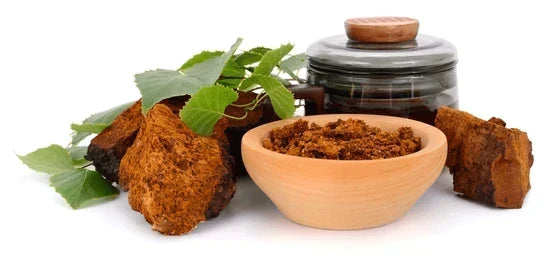
- Chaga
- Reishi
- Cordyceps
- Turkey tail
These mushrooms are typically dried, extracted, and finely ground before being mixed with coffee grounds or instant coffee powder.
A Brief History of Mushrooms in Beverages
Mushroom coffee may feel like a modern invention, but the practice of brewing mushrooms into warm drinks stretches back centuries. In Traditional Chinese Medicine, mushrooms like reishi and Lion's Mane were prepared as teas and tonics, valued for their role in daily wellness rituals. These preparations were common across parts of China and Japan long before mushroom-infused beverages reached Western markets.
In colder northern climates, Chaga, a fungus that grows on birch trees, was traditionally brewed into a dark, earthy tea. Indigenous Siberian communities, including the Khanty people, prepared Chaga decoctions as an everyday beverage. Across Scandinavia and parts of Russia, Chaga tea remained a staple folk drink for generations.
Perhaps the most well-known chapter in mushroom coffee's history occurred during World War II. When Finland's coffee supply was cut off by wartime trade disruptions, Finns turned to Chaga as a coffee substitute. The dried fungus was ground into powder and brewed much like coffee, producing a dark, smooth beverage with a slightly sweet, nutty flavor. This wartime adaptation is often cited as the direct precursor to today's commercial mushroom coffee products, and it's no coincidence that some of the category's earliest modern brands were founded in Finland.
Why Mushroom Coffee Is Trending
Mushroom coffee fits into a broader movement toward intentional food and beverage choices. Many consumers are exploring alternatives that support their personal preferences around caffeine intake, flavor, and daily rituals.
The numbers reflect this shift. According to SNS Insider, the global mushroom coffee market was valued at approximately $3 billion in 2024 and is projected to reach $4.6 billion by 2032, growing at a compound annual growth rate of 5.5%. Tastewise reports that social media discussions about mushroom coffee products increased by over 12% in the past year alone.
Here are some of the most common reasons people choose mushroom coffee.
1. A Smoother Coffee Experience
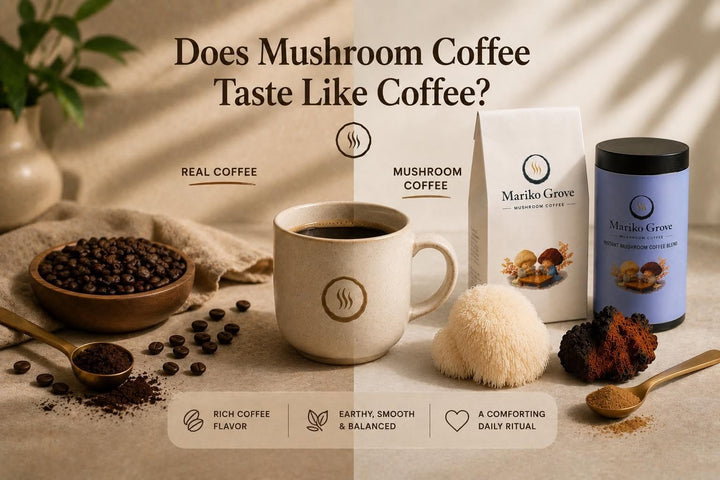
Many drinkers describe mushroom coffee as having a smooth, earthy flavor with less bitterness compared to some traditional coffees. The exact taste depends on the roast and blend, but most products aim to replicate the familiar comfort of coffee.
2. A Caffeine Level They Can Choose
Because the coffee-to-mushroom ratio differs from blend to blend, caffeine content varies by product and by brewing method. That lets people pick a blend that fits how much caffeine they actually want in a serving while still enjoying a coffee-style beverage.
(Always check product labels, as caffeine levels vary by brand.)
3. A New Take on a Daily Ritual
For many customers, mushroom coffee isn't about replacing coffee entirely. It's about adding variety. Preparing a cup can feel like a more intentional start to the day, especially for those exploring functional or specialty beverages.
What Does Mushroom Coffee Taste Like?
One of the biggest misconceptions is that mushroom coffee tastes like mushrooms.
In reality, most blends taste similar to mild or medium-roast coffee, often described as:
- Smooth
- Earthy or nutty
- Less acidic than some traditional brews
Careful roasting and extraction methods help keep the flavor approachable for regular coffee drinkers.
How Mushroom Coffee Is Made
While formulas vary between brands, the general process includes:
- Growing and harvesting edible mushroom varieties
- Drying and extracting the mushrooms to concentrate key components
- Turning the extract into a fine powder
- Blending the powder with coffee grounds or instant coffee
Some products use only mushroom extracts, while others combine extracts with additional natural ingredients or flavorings.
Why Extraction Method Matters
Not all mushroom powders are created the same way, and the extraction method can significantly affect what ends up in your cup.
Mushroom cell walls are made of chitin, the same tough material found in crustacean shells. Without proper extraction, many of the compounds locked inside those cell walls may pass through the digestive system without being absorbed. This is why extraction is a key step in mushroom coffee production.
The two most common approaches are:
- Hot water extraction: Uses heated water to draw out water-soluble compounds, primarily beta-glucans and polysaccharides. This is the most traditional method and is effective for extracting the compounds most commonly discussed in mushroom research.
- Dual extraction (hot water + alcohol): Adds an alcohol extraction step to pull out alcohol-soluble compounds like triterpenes and sterols that hot water alone cannot access. This method produces a broader spectrum of extracted compounds.
Some brands use whole mushroom powder (simply dried and ground mushrooms) without a formal extraction step. While this preserves the mushroom's full nutritional profile, the bioavailability of certain compounds may be lower compared to extracted products.
When comparing products, look for labels that specify the extraction method used. Brands that disclose this information are generally more transparent about their production process.
How People Use Mushroom Coffee
Mushroom coffee can be prepared just like regular coffee, making it easy to add to existing routines.
Popular ways customers enjoy it include:
- Morning coffee replacement
- Afternoon coffee alternative
- Mixed half-and-half with regular coffee
- Prepared with milk, oat milk, or creamers
- Instant packets for travel or busy schedules
Explore Mariko Grove's Mushroom Coffee
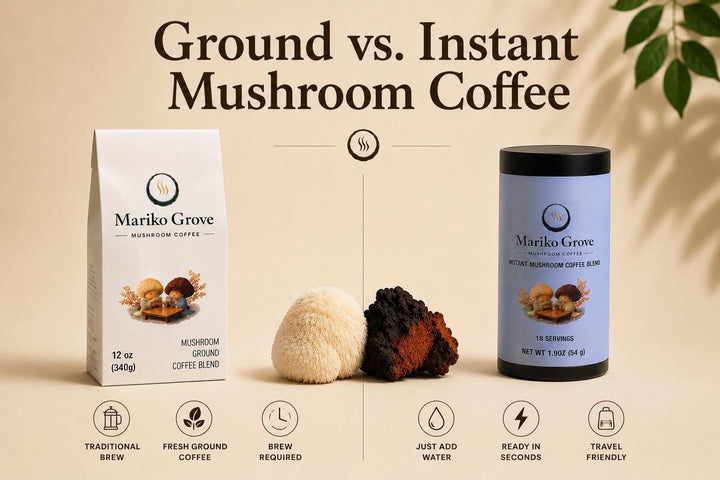
If you're curious about trying mushroom coffee, Mariko Grove offers two ways to start. Our Ground Mushroom Coffee brews just like your usual pot, blending Lion's Mane and Chaga with smooth, medium-roast Arabica. Prefer something quicker? Our Instant Mushroom Coffee dissolves in seconds: just add hot water and go. Learn more about the mushrooms in our blends on the Our Mushrooms page.
What to Look for on the Label
With dozens of mushroom coffee brands now on the market, labels can vary widely in how much they disclose. Here's a practical checklist for evaluating any mushroom coffee product before you buy:
- Mushroom species identified: The label should name the specific species used (e.g., Hericium erinaceus for Lion's Mane, Inonotus obliquus for Chaga), not just "mushroom blend" or "proprietary mushroom extract."
- Mushroom amount per serving: Look for a milligram amount of mushroom extract per serving. If it's buried inside a "proprietary blend" total without individual amounts, you can't tell how much mushroom you're actually getting.
- Fruiting body vs. mycelium disclosure: Some products use fruiting body extracts, others use mycelium grown on grain, and some use a combination. Transparent brands specify which part of the mushroom is used.
- Extraction method: Hot water, dual extraction, or whole powder; each produces a different end product. Brands that disclose this are generally more forthcoming about their process.
- Caffeine content per serving: Mushroom coffees range from about 50 mg to over 150 mg of caffeine per serving depending on the coffee-to-mushroom ratio, per Caffeine Informer's published figures. The label should state this clearly.
- Third-party testing: Independent testing for contaminants like heavy metals, pesticides, and microbial counts adds a layer of verification. Some brands publish Certificates of Analysis (COAs); here's what a COA looks like and why it matters.
- Filler ingredients: Check for added sugars, artificial flavors, or bulking agents. Simpler ingredient lists are generally a good sign.
No single factor makes or breaks a product, but a label that's transparent on most of these points suggests a brand that takes its formulation seriously.
Choosing a Quality Mushroom Coffee
If you're shopping for mushroom coffee, consider these factors before purchasing:
Clear Ingredient Lists
Look for transparent labeling that identifies the mushroom species and ingredient amounts.
Caffeine Information
Brands should clearly state caffeine content per serving.
Extraction Transparency
Some companies specify whether they use fruiting body extracts or mycelium-based ingredients.
Third-Party Testing
Independent testing can help confirm product consistency and purity. If you're unfamiliar with how testing works, our guide on what a Certificate of Analysis (COA) is covers what to look for and why it matters.
Mushroom Coffee vs. Regular Coffee
| Feature | Regular Coffee | Mushroom Coffee |
|---|---|---|
| Base ingredient | Coffee beans | Coffee + mushroom extracts |
| Flavor | Bold and roasted | Smooth and earthy |
| Caffeine level | Typically higher | Often moderate |
| Preparation | Brewed or instant | Brewed or instant |
| Lifestyle appeal | Traditional routine | Alternative coffee option |
Both beverages can fit into a balanced lifestyle; choosing between them often comes down to taste preference and caffeine goals.
For a fuller side by side on caffeine, taste, cost, and acidity, see our mushroom coffee vs regular coffee comparison.
Is Mushroom Coffee Right for You?
Mushroom coffee is best thought of as a coffee alternative rather than a replacement for healthy habits. Many people enjoy it simply for its flavor, ingredient profile, or as a way to diversify their daily beverage choices.
As with any food or drink product:
- Review ingredient labels carefully.
- Start with small servings to understand personal tolerance.
- Consult a qualified professional if you have dietary concerns or sensitivities.
Frequently Asked Questions
Are mushroom coffees actually good for you?
It depends what you are asking. As a drink, mushroom coffee is coffee, with the same caffeine and the same routine you already know. The functional mushrooms in it, such as Lion's Mane and Chaga, have been studied to varying degrees, but the research is still early and the category's marketing routinely runs ahead of the evidence. We are not going to tell you our coffee will fix anything. What we actually offer is a cup that tastes good, an honest account of what the ingredients are and are not, and transparency about what goes in the bag. If you are after a specific health outcome, that is a conversation for you and your doctor, not a coffee label.
Do mushroom coffees actually work?
It depends on what you want them to do. As a coffee, yes: mushroom coffee gives you a real cup with caffeine comparable to regular coffee, so it wakes you up and anchors a morning routine the same way. As for the functional mushrooms doing something extra, the honest answer is that the evidence is early and uneven. Ingredients like Lion's Mane and Chaga have some research behind them, but most of it is preliminary, and a tasty coffee is not a clinical dose. We are not going to promise you a result we cannot back up. What we will stand behind is a good cup, a smoother routine for people cutting back on stronger coffee, and full transparency about what is in the bag. If you are hoping for a specific effect, keep your expectations grounded and talk to your doctor.
Will mushroom coffee help with belly fat?
No. There is no good evidence that mushroom coffee burns belly fat or drives weight loss, and we are not going to pretend otherwise. Any brand promising a slimmer waistline from a cup of coffee is overselling it. Mushroom coffee is a coffee you might enjoy drinking, not a weight-loss product. If managing weight is your goal, the unglamorous basics of diet, movement, and sleep still do the work, and your doctor can help more than any coffee can.
Final Thoughts
Mushroom coffee combines familiar coffee culture with ingredients inspired by long-standing culinary traditions, from ancient Chinese tea preparations to wartime Finnish brews. Its growing popularity reflects changing consumer interest in specialty beverages that offer variety and intentionality in everyday routines.
Whether you're a dedicated coffee lover or just curious about trying something new, mushroom coffee offers a unique way to rethink your daily cup. Read more about why people are choosing Mariko Grove as their morning ritual.
Ready to explore mushroom coffee for yourself? Discover the Mariko Grove mushroom coffee collection: smooth, third-party tested, and made with Lion's Mane and Chaga.
About the Author
Chris Rea is the COO of Mariko Grove, overseeing operations, sourcing, and shipping logistics. He ensures every batch of mushroom coffee is handled with care from warehouse to doorstep.
Sources
- Lysakowska, P., Sobota, A., & Wirkijowska, A. (2023). "Medicinal Mushrooms: Their Bioactive Components, Nutritional Value and Application in Functional Food Production." Molecules, 28(14), 5393. PubMed Central
- Precedence Research. (2025). "Mushroom Coffee Market Size, Share, and Trends Analysis Report, 2026-2035." Precedence Research
- Caffeine Informer. (2025). "Caffeine in Mushroom Coffee." Caffeine Informer
- SNS Insider. (2025). "Mushroom Coffee Market Size, Share & Growth Report, 2025-2032." SNS Insider
- Tastewise. (2025). "The Mushroom Coffee Trend Everyone's Talking About in 2026." Tastewise
- Mycelyum Inc. "Chaga's Recent History in Finland." Mycelyum
FDA Compliance Disclaimer: This content is provided for informational purposes only and is not intended to diagnose, treat, cure, or prevent any disease. Statements regarding mushroom coffee products have not been evaluated by the U.S. Food and Drug Administration.