Why We Test Every Batch | COA Explained — Mariko Grove
What Is a COA? Why Third-Party Testing Matters for Mushroom Coffee
By Joseph Williamson, CTO of Mariko Grove · Last updated May 19, 2026
If you're new to mushroom coffee, you might not know what to look for beyond flavor and price. But there's one thing that separates trustworthy brands from the rest — and most people never think to ask about it.
It's called a COA: a Certificate of Analysis. And it might be the most important thing about the coffee you're drinking.
First, What Is Mushroom Coffee?
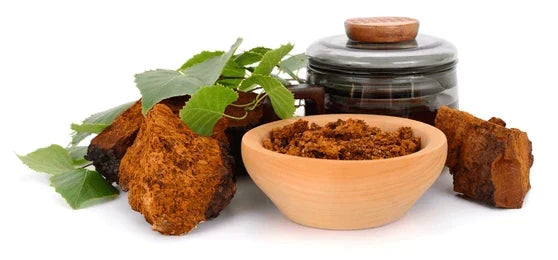
Mushroom coffee is regular coffee blended with powdered functional mushrooms — like Lion's Mane, Chaga, or Reishi. People drink it for the coffee taste plus the ingredients traditionally associated with focus, daily wellness, and a more intentional morning routine.
But here's the problem: mushrooms are natural sponges. They absorb everything from the environment they grow in — good things like nutrients, but also harmful things like heavy metals, pesticides, and mold.
Why Untested Mushroom Coffee Can Be Risky
Unlike a supplement manufactured in a controlled lab, mushrooms grow in soil, on logs, or in outdoor beds. If the soil contains lead, arsenic, or cadmium — which is common in many parts of the world — the mushroom will absorb it. Those heavy metals can accumulate in your body over time and cause serious long-term health problems.
Mushrooms are also moist and fragile. If they aren't dried and stored correctly, they can develop mold — and some molds produce mycotoxins, which are toxic compounds that pose real risks to human health.
Finally, without testing, you have no idea if the powder in your coffee is even the mushroom listed on the bag. Some low-quality products use fillers like grain starch or entirely different mushroom species.
What Is a COA? (Certificate of Analysis)
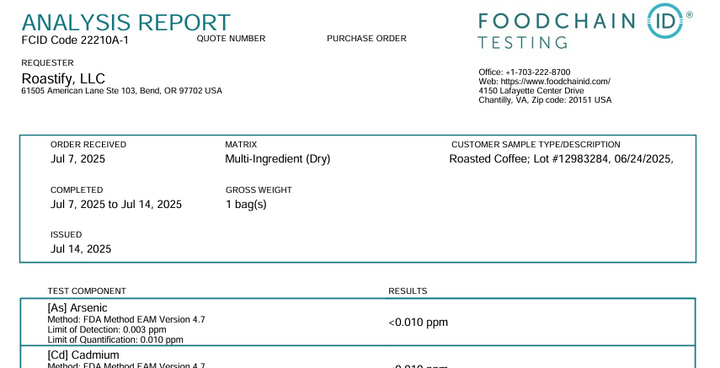
A COA is a lab report. Think of it as a safety report card for a specific batch of mushroom coffee.
A reputable, independent third-party lab tests a sample from the batch and issues the COA. It lists:
- Pass/fail results for heavy metals — lead, arsenic, cadmium, mercury
- Microbial levels — total bacteria, yeast, mold, E. coli, Salmonella
- Potency — how much of the key compounds (like beta-glucans) are actually present
- Identity — confirmation that the mushroom species matches what's on the label
Every COA is tied to a batch number, so you can match the report to the exact bag you purchased.
Why Mariko Grove Tests Every Single Batch
Some brands test one harvest and then assume all future harvests are the same. That's a flawed approach, because growing conditions vary. Rain, temperature, soil composition, drying methods — all of these affect safety and quality from one batch to the next.
Mariko Grove tests every batch because:
- Safety is not a one-time event. Each batch of mushrooms could have different heavy metal or mold levels. Batch-by-batch testing catches problems before anyone drinks it.
- Transparency builds trust. We want you to see the COA yourself — not just take our word for it. You can find our lab reports on our Lab Reports page.
- Beta-glucan levels matter. Beta-glucans are fiber-like compounds often associated with nutritional value and traditionally included in wellness routines. Without testing, you might be paying for mushroom coffee that has almost no functional ingredients. Mariko Grove tests to confirm every batch delivers what the label promises.
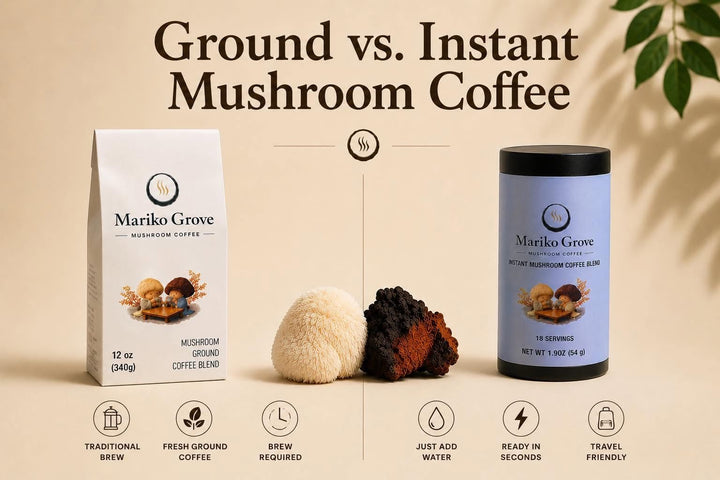
Both our ground mushroom coffee and instant mushroom coffee go through this process — every time. You can learn more about the functional mushrooms we use on our Our Mushrooms page.
How to Read a COA (It's Simpler Than You Think)
If you're buying mushroom coffee from any brand, look for a COA on their website. Search for "COA," "lab results," or "third-party testing."
Here's what to check:
- Heavy metals — All results should say "Pass" or show numbers well below established safety limits
- Mold / yeast — Look for "Not detected" or results within passing range
- Beta-glucans — A percentage (e.g., 25% or higher) — higher generally indicates more of the compounds people seek in functional mushrooms
If a brand cannot provide a current COA for the batch you're holding, don't buy it. You have no idea what's actually in the bag.
The Bottom Line
Mushroom coffee is a wonderful daily ritual — if it's clean and potent. But mushrooms are eager absorbers of toxins, and without testing, you're guessing. A COA turns guessing into knowing.
Mariko Grove gets every batch tested because we want you to enjoy your morning cup with confidence — not wonder about heavy metals, mold, or mystery fillers. That's not extra credit. That's the bare minimum for a responsible mushroom coffee company. Learn more about why people are making Mariko Grove their morning ritual.
Frequently Asked Questions
What is a COA (Certificate of Analysis)?
A COA is a lab report issued by an independent third-party lab for a specific batch of mushroom coffee. It lists pass/fail results for heavy metals (lead, arsenic, cadmium, mercury), microbial levels (bacteria, yeast, mold, E. coli, Salmonella), potency (beta-glucan content), and species identity confirmation.
Why is third-party testing important for mushroom coffee?
Mushrooms absorb heavy metals, pesticides, and mold from their growing environment. Without testing, there is no way to verify that the product is free of contaminants or that it actually contains the mushroom species listed on the label. Third-party testing catches these problems before anyone drinks it.
Does Mariko Grove test every batch?
Yes. Mariko Grove tests every batch of both its ground mushroom coffee and instant mushroom coffee. Lab reports are published on our Lab Reports page so customers can verify results themselves.
How do you read a COA?
Check three things: heavy metals should say "Pass" or show numbers well below safety limits; mold and yeast should show "Not detected" or results within passing range; and beta-glucans should show a percentage (25% or higher generally indicates more of the compounds people seek in functional mushrooms).
About the Author
Joseph Williamson is the CTO and co-founder of Mariko Grove. With over 20 years of software engineering experience, he leads the company's technical operations — including the systems behind batch tracking, lab report publishing, and quality assurance.
Sources
- U.S. Food and Drug Administration. "Current Good Manufacturing Practices (CGMPs) for Dietary Supplements." 21 CFR Part 111. eCFR
- Kalac, P. (2021). "Heavy metals content in edible mushrooms: A systematic review, meta-analysis and health risk assessment." Trends in Food Science & Technology, 110. ScienceDirect
- McCleary, B.V. and Draga, A. (2016). "Measurement of beta-Glucan in Mushrooms and Mycelial Products." Journal of AOAC International, 99(2), 364-373. PubMed
- NSF International. "Dietary Supplement and Vitamin Certification." NSF.org
These statements have not been evaluated by the Food and Drug Administration. This product is not intended to diagnose, treat, cure, or prevent any disease.