Lion's Mane vs Chaga: What's the Difference?
Lion's Mane vs Chaga: How They Differ, and Why We Use Both
By Chris Rea, COO of Mariko Grove · July 2026
Updated August 26, 2026
Lion's Mane and Chaga are the two mushrooms in every Mariko Grove blend, and they're genuinely different from each other: different in what they are, where they come from, how they taste, and the reason each one is in your cup. If you've wondered whether you should care about one more than the other, or why a coffee would bother with both, this is the short, honest version.
This post compares the two side by side. For the full story on each, we've written deep dives on Lion's Mane and on Chaga separately. Here we're focused on the differences and how they fit together.
What Each One Actually Is
They aren't just two names for similar things. Structurally they're about as different as two fungi can be.
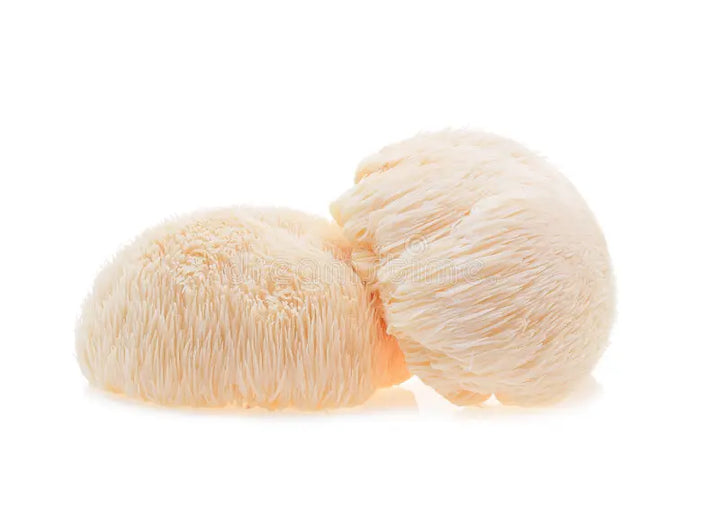
Lion's Mane (Hericium erinaceus) is the one that looks like a mushroom, sort of: a rounded white growth of soft, cascading strands, like a shaggy pom-pom, that grows on hardwood trees. When brands talk about using the "fruiting body" or the "mycelium," they're describing different parts of this fungus. It has a long history as a culinary mushroom you can actually cook and eat.
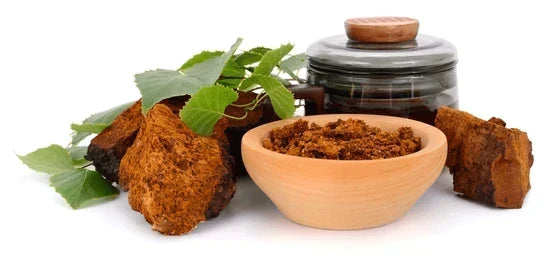
Chaga (Inonotus obliquus) barely looks like a mushroom at all. It grows on birch trees as a dark, hard, crusted mass, and it isn't a cap-and-stem fruiting body: it's a sclerotium, a dense mass of mycelium, that forms slowly on the outside of the tree over several years. You wouldn't sauté it. Traditionally it was broken up, dried, and brewed into a drink.
Where They Come From
Their traditions are almost opposite ends of the map, and that history is part of each one's character.
Lion's Mane is an East Asian culinary tradition. It shows up in Chinese cooking and, in Japan, is called yamabushitake after the mountain monks who were said to favor it during long stretches of meditation. That link to quiet, contemplative focus is a big part of why people are drawn to it today.
Chaga is a cold-climate brewing tradition. It was prepared as a warm drink for generations across Siberia and Scandinavia, and it has a real coffee connection: during World War II, when coffee supplies were cut off, Finns dried and ground Chaga as a coffee substitute. That wartime cup is a direct ancestor of today's mushroom coffee, which is a nice reason for Chaga to be in a coffee blend specifically.
What They Taste Like in Coffee
Neither one makes your coffee taste like mushrooms, which is the first thing most people worry about. But they contribute a little differently.
- Lion's Mane in extract form is close to neutral, a touch earthy at most. In a cup of coffee it essentially disappears; you won't pick it out as a flavor.
- Chaga is smooth, earthy, and slightly woody, sometimes described as mildly vanilla-like. It's less bitter than coffee, so it tends to round the cup out and add a little depth rather than a distinct taste.
Together the effect is a smooth, coffee-forward cup, not a mushroom-forward one. If you want more on flavor and first-cup expectations, our beginner's guide covers it.
What They Have in Common
For all their differences, the two share the traits that make them work in a daily coffee:
- Both are functional mushrooms, the category people often group under the "adaptogenic" label, and both are used as considered, everyday-ritual ingredients rather than as strongly flavored foods.
- Both are caffeine-free on their own. Any caffeine in your cup comes from the coffee, not the mushrooms. That's why the caffeine in our blends is comparable to a regular cup, no more.
- Both are dried and extracted into fine powders before they go into the blend, so they dissolve and brew cleanly instead of sitting as gritty bits.
Side-by-Side Comparison
The quick reference version:
| Feature | Lion's Mane | Chaga |
|---|---|---|
| Scientific name | Hericium erinaceus | Inonotus obliquus |
| What it is | A toothed fungus with soft white cascading strands; grows on hardwood, and is edible as a culinary mushroom | A sclerotium (a dense mass of mycelium) that forms as a dark, hard growth on birch trees |
| Traditional background | East Asian cuisine; associated with Japanese mountain monks and contemplative focus | Brewed as a warm drink across Siberia and Scandinavia; a Finnish wartime coffee substitute |
| Flavor in coffee | Nearly neutral, faintly earthy; disappears into the cup | Smooth, earthy, mildly woody; adds depth, less bitter than coffee |
| Caffeine on its own | None | None |
| Commonly chosen to support | Cognitive function and focus* | Antioxidant activity and daily wellness* |
| Role in our blend | The focus character | The antioxidant and coffee-heritage character |
The two "commonly chosen to support" descriptions are why people reach for each mushroom; they are not medical claims, and the disclaimer at the end applies.
Why We Use Both Instead of One
We could have built a single-mushroom coffee. We chose two, and the reasoning is simple: they play different roles that happen to suit the same cup.
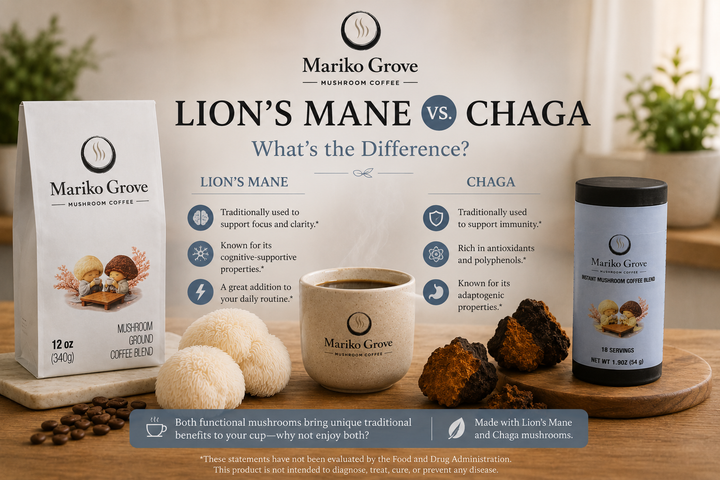
Lion's Mane is the reason a lot of people come to functional coffee in the first place, the mushroom people associate with focus and mental clarity*. Chaga brings a different quality, the one associated with antioxidant activity and daily wellness*, plus a flavor that genuinely improves the coffee and a heritage as a coffee substitute that makes it feel at home in the cup. One leans toward the "why" people try mushroom coffee; the other leans toward making it a better, smoother daily drink. Put together in a medium-roast Arabica base, they make a morning cup that stands on both.
We keep it to these two on purpose. Rather than stacking in reishi, cordyceps, and a long label of extras, we picked the two that fit a daily coffee and are honest about what each is there for. You can read how we think about the pairing on our Our Mushrooms page.
When You Might Want Just One
Honesty beat: not everyone needs a blend, and we'd rather you get the right thing than the Mariko Grove thing.
- If focus is the only thing you're after, a standalone Lion's Mane product (a powder or capsule) lets you use it on its own terms, including in the evening when you don't want caffeine.
- If you want a caffeine-free, antioxidant-associated warm drink, a straight Chaga tea is a lovely thing in its own right and has centuries of tradition behind it.
- If what you actually want is a better morning coffee that brings both mushrooms along for the ride, that's exactly what our blend is for.
Our coffee is a daily-cup product, so we pair both into the format most people already drink every morning. If your goal is different, a single-ingredient product might serve you better, and that's a fine answer.
Frequently Asked Questions
What's the difference between Lion's Mane and Chaga?
They're different fungi with different forms, traditions, and flavors. Lion's Mane (Hericium erinaceus) is a soft, white, edible mushroom from East Asian culinary tradition, commonly chosen to support cognitive function and focus.* Chaga (Inonotus obliquus) is a hard, dark mass of mycelium that grows on birch trees and was traditionally brewed as a warm drink in Siberia and Scandinavia, commonly chosen to support antioxidant activity and daily wellness.* Both are caffeine-free on their own.
Can you take Lion's Mane and Chaga together?
Yes, and many people do. Our mushroom coffee combines both in a single blend, and they're commonly used together in functional-mushroom products. We don't make any potency or interaction claims about the combination; we pair them because their roles and flavors complement each other in a daily cup.
Do Lion's Mane and Chaga taste different?
Yes, though neither tastes strongly of mushroom. Lion's Mane extract is close to neutral and mostly disappears into coffee. Chaga is smooth, earthy, and mildly woody, adding a little depth while staying less bitter than coffee. Blended into a cup, the overall result is coffee-forward and smooth.
Is Lion's Mane or Chaga caffeinated?
Neither. Both Lion's Mane and Chaga are naturally caffeine-free. In a mushroom coffee, all of the caffeine comes from the coffee itself, which is why our blends are comparable in caffeine to a standard cup of coffee.
Should I choose Lion's Mane or Chaga?
It depends on what you want. If you're mainly interested in the focus-associated mushroom and want it caffeine-free or in the evening, a standalone Lion's Mane product may suit you. If you want a caffeine-free traditional warm drink, straight Chaga tea is worth exploring. If you want a smooth daily coffee that includes both, that's what our blend is built for.
The Bottom Line
Lion's Mane and Chaga aren't interchangeable. One is a soft culinary mushroom tied to focus and contemplation; the other is a hard birch-grown fungus with a coffee-substitute history and an antioxidant association. They differ in form, origin, and flavor, and they share the things that matter for a daily cup: no caffeine of their own, no mushroomy taste, and a clean extract. We use both because each earns its place, one for the reason people try functional coffee and one for the cup itself.
Want to taste the pairing? Both our ground mushroom coffee and instant mushroom coffee are a medium-roast Arabica base with Lion's Mane and Chaga. You'll find both bags in our mushroom coffee collection. Learn more about the two on Our Mushrooms.
About the Author
Chris Rea is the COO of Mariko Grove, overseeing operations, sourcing, and shipping logistics. He ensures every batch of mushroom coffee is handled with care from warehouse to doorstep.
*These statements have not been evaluated by the Food and Drug Administration. This product is not intended to diagnose, treat, cure, or prevent any disease.